A useful estimate is not an exact measurement
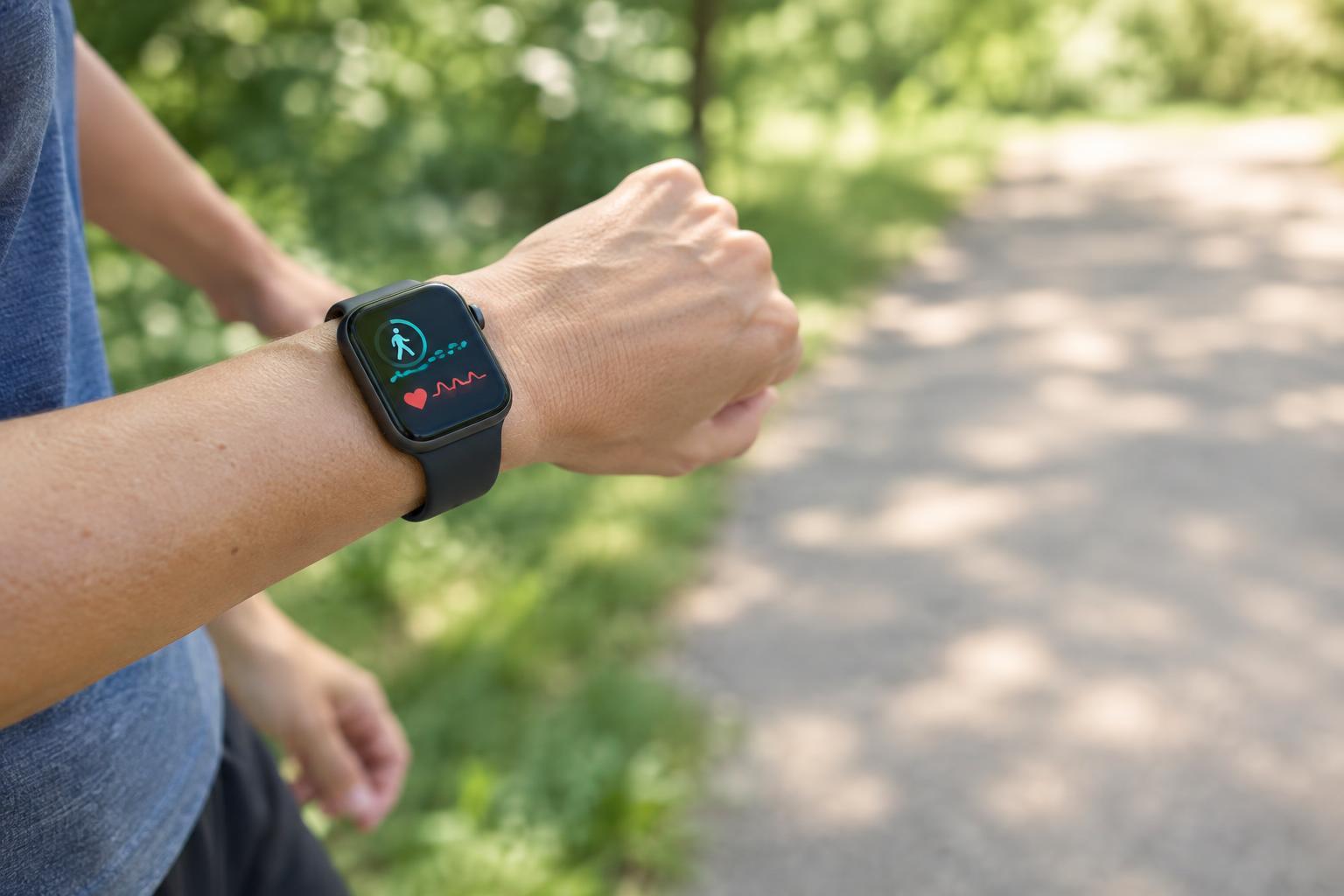
A smartwatch turns signals from small sensors into numbers that are easy to check throughout the day. That convenience can make a step count or heart-rate reading feel more precise than it is. The watch does not observe every footfall or measure the heart directly. It detects movement and changes in light at the wrist, then uses software to estimate what those signals mean.
These estimates can still be helpful. They may show whether your usual day involves more or less movement, or how your heart rate changes during a familiar activity. The key is to treat a single number as one clue, not a complete account of your activity or health. Patterns gathered under similar conditions are often more informative than a surprising reading in isolation.
What a step count captures—and what it misses
Most smartwatches identify steps from repeated wrist motion. Walking with a natural arm swing usually gives the device a clearer pattern to recognize. If you push a stroller or shopping cart, carry something that keeps your watch arm still, or hold a treadmill rail, the watch may count fewer steps than you take. Some nonwalking motions can look enough like walking to add steps you did not take.
A step count is therefore best understood as a consistent activity estimate, not a perfect tally or a measure of effort. Two walks with the same number of steps can feel very different if one involves hills, a faster pace, or a heavy bag. Cycling, swimming, and other activities may demand effort while adding few steps. If you use a daily step goal, consider it a prompt to move rather than a score for everything your body did that day.
When comparing days, keep context in mind. A change in which wrist you wear the watch on, how often you take it off, or how much you carry in your watch hand can affect the result. A phone and a watch may also show different totals because they are carried differently and may process movement differently.
What the heart-rate sensor is reading
Many smartwatches estimate heart rate using an optical sensor. Lights shine into the skin, and the sensor detects changes in reflected light associated with blood flow. The watch converts that signal into beats per minute. This method is convenient for repeated checks, but it depends on a clean signal from a moving wrist.
Fit and activity matter. A loose band, a watch sitting over the wrist bone, cold skin, sweat, or vigorous arm movement can make it harder to get a stable reading. A number that suddenly jumps or drops may reflect a poor sensor signal rather than a sudden change in your heart rate. During an activity with lots of wrist motion, the displayed value may also take time to catch up with changes in effort.
Heart rate is affected by more than exercise. Sleep, stress, temperature, caffeine, and other everyday factors can influence it. A watch can help you notice a pattern, such as how a familiar walk compares with previous walks, but heart rate alone cannot tell you why the pattern changed.
Make comparisons fairer
For a clearer trend, wear the watch snugly enough that it stays in place without being uncomfortable, and follow the maker’s placement guidance. Keep the sensor area clean. If a reading looks implausible, pause, check the fit, and see whether it settles before drawing a conclusion. None of these steps guarantees accuracy, but they can reduce avoidable signal problems.
Compare like with like where possible: the same activity, a similar route, or readings taken at roughly the same point in your routine. Look across several days rather than reacting to one unusual value. Also check what a screen is showing. A current heart rate, an activity average, and a daily resting-heart-rate estimate answer different questions and should not be treated as interchangeable.
Know when the watch is not enough
Step counts cannot establish your fitness level, and a wrist heart-rate estimate cannot diagnose a condition. Even watches with additional health features have limits that depend on the device and the feature. If you have symptoms or a health concern, do not use a reassuring watch number as a reason to dismiss it; seek guidance from an appropriate healthcare professional.
It is also worth deciding how much attention these numbers deserve. Notifications and goals can be motivating, but they can become distracting if every fluctuation feels urgent. Use the watch to support a habit you care about, such as taking regular walks or learning how different activities feel. The most useful reading is one you can interpret in context—and set aside when it cannot answer your question.