Start with the accidents you want to guard against
Phone cases cannot make a phone damage-proof. Their main job is to put material between the device and whatever it hits, while making the phone easier to keep hold of in the first place. Think about your routine before choosing one: does your phone slip from a desk, get knocked around in a bag, or feel precarious when you use it one-handed?
A slim case may be enough if your priority is preventing scratches and adding a little grip. If drops are a recurring concern, look for more material around the corners and edges, where impacts can be concentrated. A raised rim around the screen and camera can help keep those surfaces off a flat table, but it offers less protection against an uneven surface such as gravel. A screen protector can address a different part of that risk, though it is not a guarantee against breakage.
Understand what the materials feel like
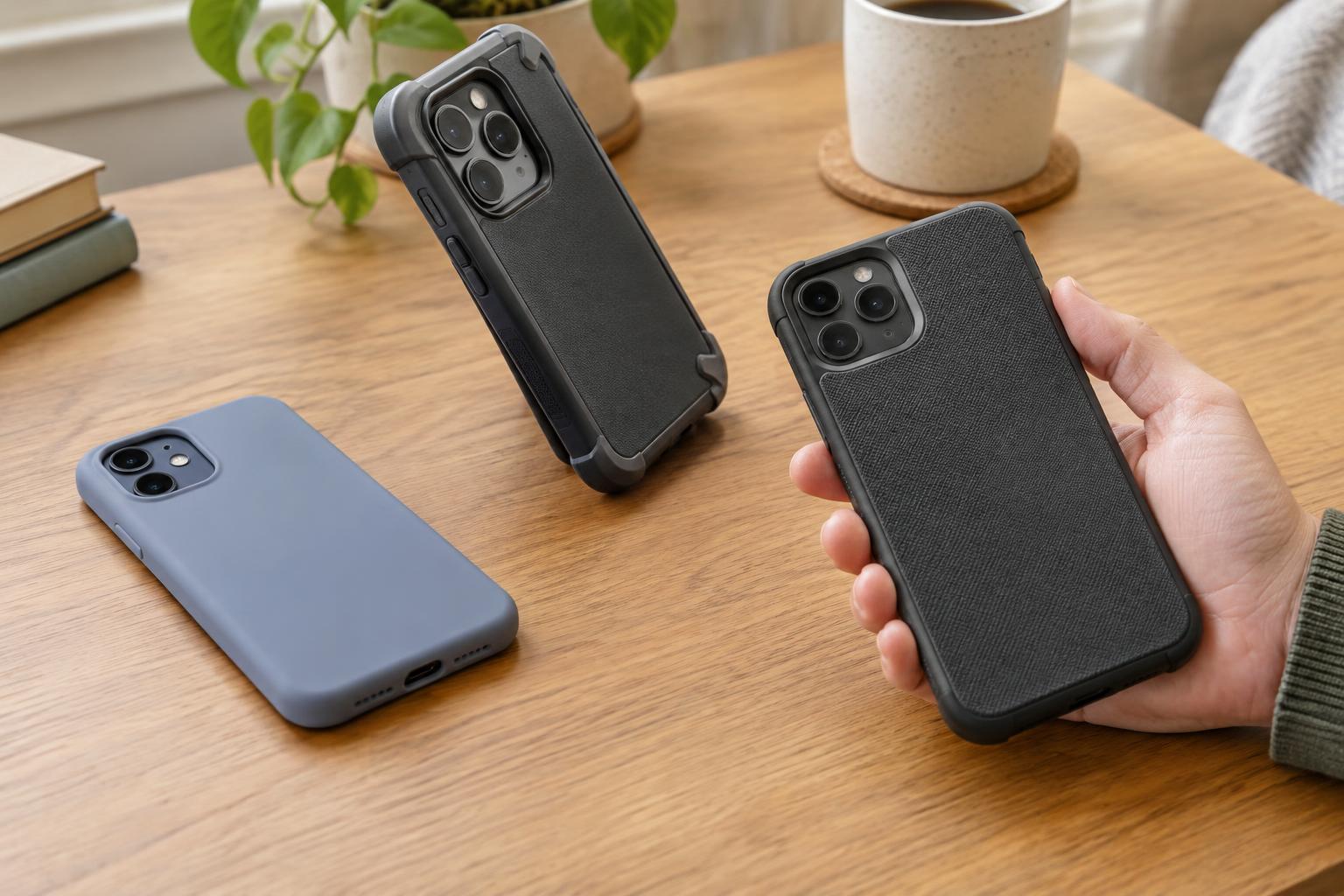
Flexible cases are usually easy to put on and remove, and their slightly compliant edges can make them comfortable to hold. Some have a tacky finish that improves grip; others are smooth enough to slide readily into a pocket. Hard-shell cases can feel thinner and more rigid, but a slick finish may be harder to hold. Many protective designs combine a flexible inner layer with a firmer outer shell.
Material names alone tell you little about how a case will work in daily use. Pay attention to its texture, the shape of its sides and how firmly it fits. A textured surface may feel secure without needing a large case. On the other hand, a very grippy surface can catch on pocket fabric or collect lint. Clear cases show off the phone, but fingerprints, scratches and changes in appearance may be more noticeable over time.
Judge protection without relying on one label
Product listings often emphasize drop heights or protective-sounding labels. Such claims can be useful points of comparison, but they may reflect particular test conditions rather than every possible fall. The landing angle, surface and any object the phone strikes can change the outcome. Instead of treating a rating as a promise, examine the case's physical design and check whether the seller explains what a claim means.
Look for corners that are covered rather than exposed, edges that stay in place when gently handled, and a fit that does not leave the phone loose. Check the area around the charging port and speakers: generous cutouts make accessories easier to use, while more enclosed designs may cover a little more of the phone. If the case has a built-in screen cover or port flap, consider whether opening and cleaning it will be convenient enough for everyday use.
Account for bulk where it matters
Bulk is more than overall thickness. A case can make a phone noticeably wider, heavier or harder to reach across with your thumb. Raised camera protection can also affect how steadily it sits on a desk. If you carry your phone in a small pocket, measure your priorities against that routine rather than assuming the most protective-looking option is the best fit.
Extra features deserve the same scrutiny. A kickstand or card holder can be useful, but it adds parts that may snag or change how the phone rests in your hand. If you use wireless charging or magnetic mounts, check that the case explicitly supports your phone and the accessories you own. Compatibility can depend on case thickness and magnet placement, so a case that fits the phone is not automatically a good match for every charger or mount.
Make a short checklist before you buy
Confirm the exact phone model, including its size or generation; small differences in button and camera placement can make a near-match unusable. Look closely at product photos of the front lip, corners and camera opening. Reviews can help reveal recurring fit or grip complaints, but individual drop stories do not establish how a case will perform for everyone.
Once the case is on, check that buttons press cleanly, cables plug in fully, microphones and speakers remain clear, and the edges do not lift during normal handling. Hold the phone as you usually would and try slipping it into your usual pocket or bag. The right balance is the case you will comfortably keep on: enough coverage for your concerns, a grip you trust and no more bulk than you are willing to carry.