Start with the earbud, not the tip size
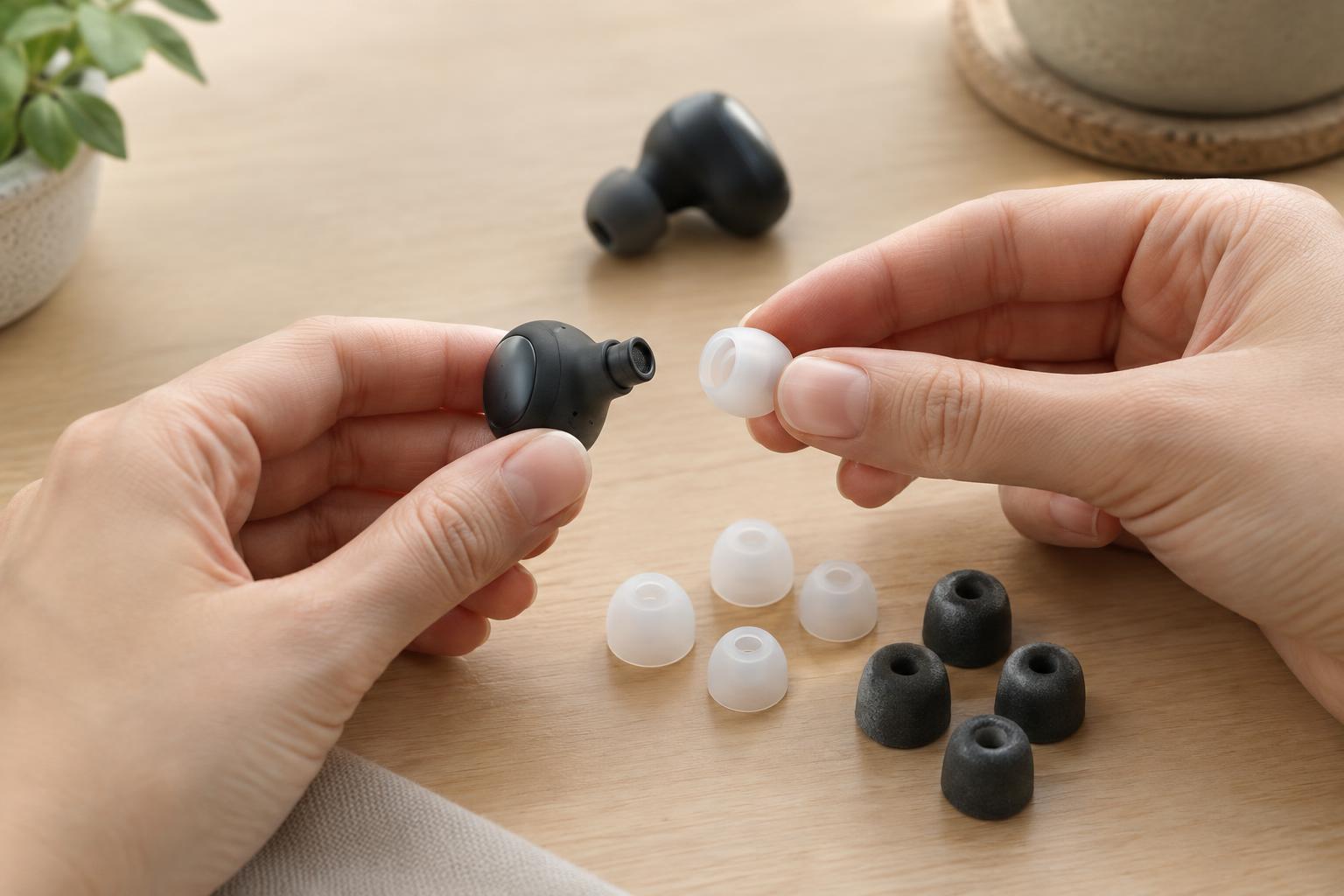
A replacement tip has two jobs: it must stay attached to the earbud and sit comfortably in your ear. Before shopping, identify the exact earbud model and inspect how its current tips connect. Some tips stretch over a round nozzle; others clip onto a shaped connector or use a model-specific locking design. A listing that says “universal” may still be unsuitable for an earbud with an unusual attachment.
If the original tips are available, compare their attachment openings, inner sleeves and overall shape with the proposed replacements. Check the product description for your exact model rather than relying on a similar-looking photograph. Nozzle diameter alone may not tell the whole story: the tip also needs to grip securely without covering a sound opening or microphone. After fitting a new tip, give it a gentle tug. If it slips off easily or requires excessive force to install, it is not a good match.
Also consider the charging case. A taller or wider tip may feel fine in your ear but prevent the earbuds from sitting properly on their charging contacts. Confirm that the case closes normally and that both earbuds charge after you install the tips.
Choose a size by feel and seal
The size printed on a tip package is a starting point, not a measurement of your ear. Small, medium and large can vary between brands, and your left and right ears may need different sizes. Start with the size you normally use, then try one size on either side if the fit is uncertain. Insert each earbud as you usually would; pushing a tip deeper is not a reliable way to make an unsuitable size work.
A tip that is too small often feels loose, shifts when you move your jaw or lets outside sound through. A tip that is too large may feel compressed, create uncomfortable pressure or work its way out. The right fit should feel stable without needing constant adjustment. It should also remain comfortable during the length of time you normally wear your earbuds, not just for the first minute.
Listen at a moderate volume to a familiar track while seated, then turn your head and speak. If bass becomes noticeably thinner or outside sound changes as the earbud moves, the seal may be inconsistent. Some earbuds offer an in-app fit check, which can be a useful additional clue, but comfort and stability still matter.
Compare silicone and foam without assuming one is better
Silicone tips are common because they are flexible, easy to wipe clean and available in many shapes. Their feel varies: a soft, thin flange may sit differently from a firmer one even when both are labeled the same size. If silicone slips, try another shape or size before assuming the material cannot work for you.
Foam tips compress before insertion and expand to meet the ear canal. Some people find that this helps with an uneven fit or provides a steadier seal. Foam can also feel warmer or more noticeable, and it generally needs more careful cleaning and eventual replacement as it wears. Check the maker’s care instructions rather than soaking or scrubbing foam by default.
Neither material guarantees better sound or noise cancellation. An effective seal can help an earbud deliver its intended sound and reduce some outside noise, but results depend on the earbud design and your individual fit. A tip that seals strongly but hurts is not a successful choice.
Test the fit in ordinary use
Try new tips in the situations where you actually use your earbuds: at a desk, while walking and, if relevant, during a light workout. Notice whether they stay put when you talk or smile and whether either ear becomes sore. If one side repeatedly loosens, change that side alone. There is no requirement to use a matching size in both ears.
Check the practical details after each change. Make sure the tips have not shifted on the nozzles, the earbuds still fit in their case and any fit-related controls work as expected. If an earbud has a wear-detection sensor near the tip, an unusually wide replacement might interfere with it. Avoid a tip that blocks a sound outlet, even if it seems to attach securely.
Keep the packaging until you are satisfied with the fit, and note the model, material and size that worked. That makes the next replacement easier, especially if you need different sizes for each ear.
Replace tips when the fit changes
Tips do not last forever. Inspect them periodically for tears, stretched attachment points, stubborn buildup or foam that no longer springs back. Clean removable tips according to their material and the earbud maker’s instructions, and let them dry fully before reattaching them. Never force a tip into your ear or continue wearing one that causes pain or irritation.
If several sizes and materials fail to feel secure, the issue may be the earbud’s shape rather than the tip. In that case, a different earbud design may be more useful than buying more replacement tips. The goal is a tip that attaches safely, maintains a reasonably consistent seal and feels comfortable through your normal listening session.