Start with the camera setup you actually use
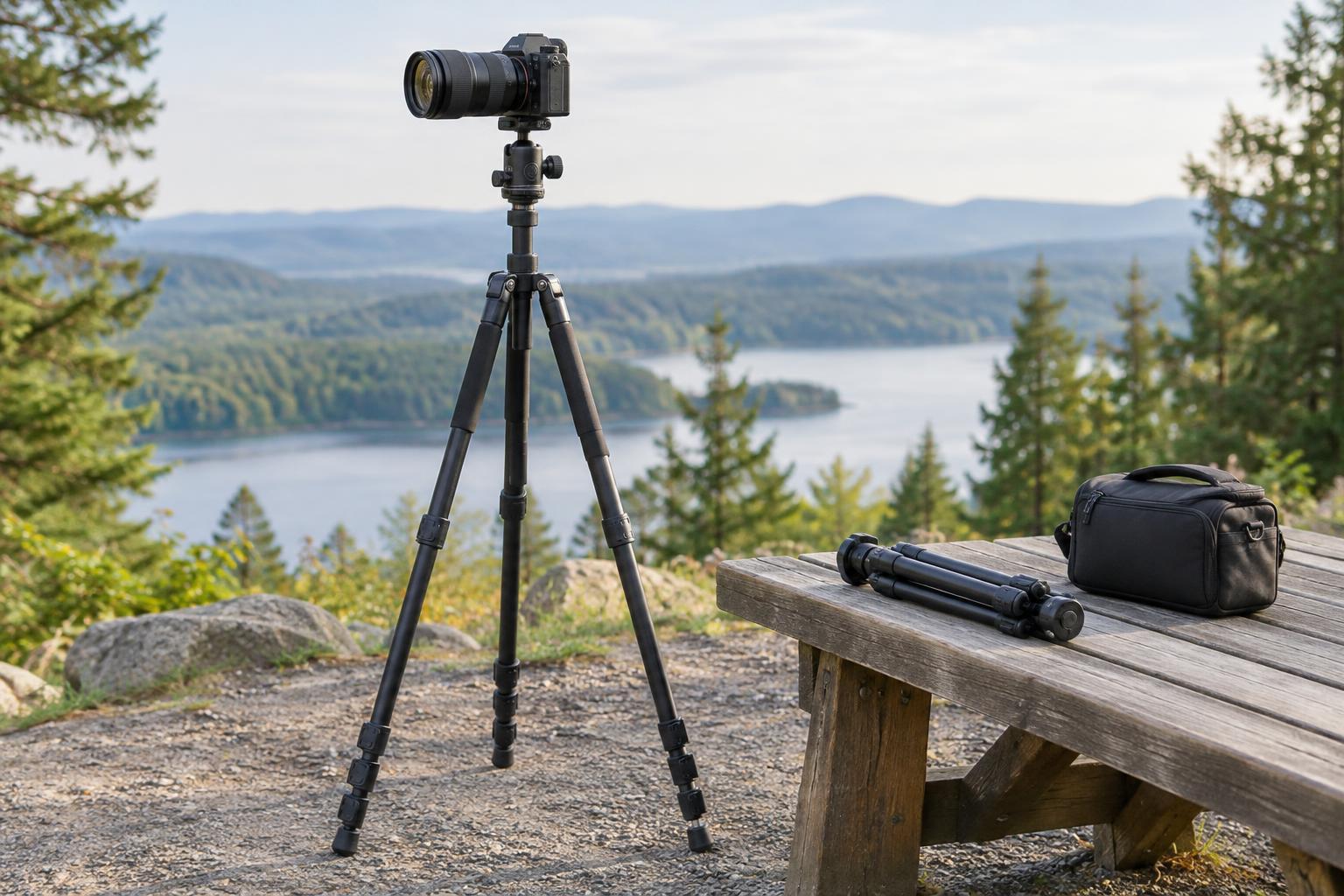
Before comparing tripods, list the equipment the tripod will support. Include the camera, your heaviest likely lens, the tripod head if it is sold separately, and accessories such as a microphone, light or mounting bracket. A small camera with a long lens can be more demanding than its total weight suggests because the lens shifts weight away from the mounting point.
Think about where you will use the tripod, too. A tripod that stays near a desk can prioritize comfortable height and easy adjustments. One carried on walks may need to fit inside or alongside a bag. If you switch between still photography and video, note which movements you need from the head rather than assuming every tripod will handle both equally well.
Treat load capacity as a starting point, not a stability score
A tripod’s stated load capacity tells you how much weight its maker says it can support. It does not, by itself, tell you how quickly the legs settle after you touch the camera or how well the setup resists vibration. Ratings can also be difficult to compare across brands because they may not reflect identical conditions.
Choose a tripod and head rated to carry your complete setup, with room for gear you expect to add. Then consider how that weight is distributed. A heavy lens, an extended horizontal arm or an accessory mounted off to one side may make a setup less steady even when its total weight is below the stated limit. If you use a lens with a tripod collar, mounting at the collar can help balance the camera and lens over the head.
Leg construction matters alongside the rating. Thicker lower leg sections and fewer extended sections can provide a steadier working position, while a fully raised center column often makes a tripod more susceptible to movement. For critical shots, a shorter, well-planted setup may be more useful than the maximum height printed in the specifications.
Compare usable height, not just maximum height
Tripod height specifications may describe the legs with the center column down, the height with the column raised, or a combination that includes a head. Check what is being measured. The height you need is the position of the camera’s viewfinder or screen when you are ready to shoot, not simply the top of the bare legs.
For comfortable standing use, look for a height that suits you with the center column mostly lowered. For tabletop work, product photography or ground-level compositions, check minimum height as well. Some tripods allow the legs to spread widely or the center column to be repositioned, but those adjustments take space and may change how you balance the camera.
You do not need every shot to be at eye level. A lower camera position can suit portraits, landscapes or close-ups. The goal is to avoid choosing a tripod that forces an awkward posture for your most common work or relies on its least stable configuration every time you use it.
Match the head to the movements you need
The tripod head determines how you aim and lock the camera. A ball head makes it quick to adjust the camera in several directions and is a versatile choice for many still photographers. Look for controls you can operate comfortably and a lock that holds your setup without the camera noticeably drooping after you let go.
A pan-and-tilt head offers separate controls for different axes, which can help when you want to adjust one direction without changing another. For smooth video pans and tilts, consider a head designed for video; a basic still-photo head may hold the camera securely but make controlled movement difficult. The head has its own capacity and height, so include both when evaluating a set of legs.
Check the quick-release plate and mounting system before buying. Plates that look similar are not always interchangeable, even when a listing describes them with a familiar style name. If you already own plates, brackets or a camera cage, verify their fit with the specific head or clamp. A secure, convenient plate is especially valuable when you frequently move the camera between handheld and tripod use.
Balance packed size against setup speed and steadiness
Packed length tells you whether a tripod will fit in your bag, suitcase or storage spot. A shorter folded tripod often uses more leg sections or a folding design that takes additional steps to deploy. Compare packed length and carrying weight with working height and the size of the lowest leg sections; no single measurement captures how it will feel to carry and use.
Also consider the details you will handle repeatedly: twist locks or flip locks, the size of the controls, and whether the feet suit the surfaces where you normally shoot. Neither lock style is automatically better; the useful choice is one you can open, secure and check without fuss. On uneven ground, set the legs deliberately and confirm that every lock is tight before attaching or leaving the camera.
To narrow your shortlist, put your four priorities in order: the weight and balance of your camera setup, the height you use most, the movements you need from the head, and the size you are willing to carry. A tripod that meets those everyday needs is a better choice than one that leads on a single specification but stays at home because it is inconvenient.