Start with where and how you will listen
The best noise-cancelling headphones for a long commute may not be the best pair for video calls at a desk. Before comparing models, list the places you expect to use them and the devices you need to connect. That gives you a way to judge features that might otherwise look equally important on a product page.
Active noise cancellation, or ANC, uses microphones and processing to reduce outside sound. It is generally better suited to steady background noise, such as an engine or ventilation system, than to every sudden sound or nearby conversation. The physical seal matters too: earcups or ear tips that fit well can block some sound even before ANC is switched on. Treat noise cancellation as a way to make listening more comfortable, not as a promise of silence.
Choose a fit you can live with
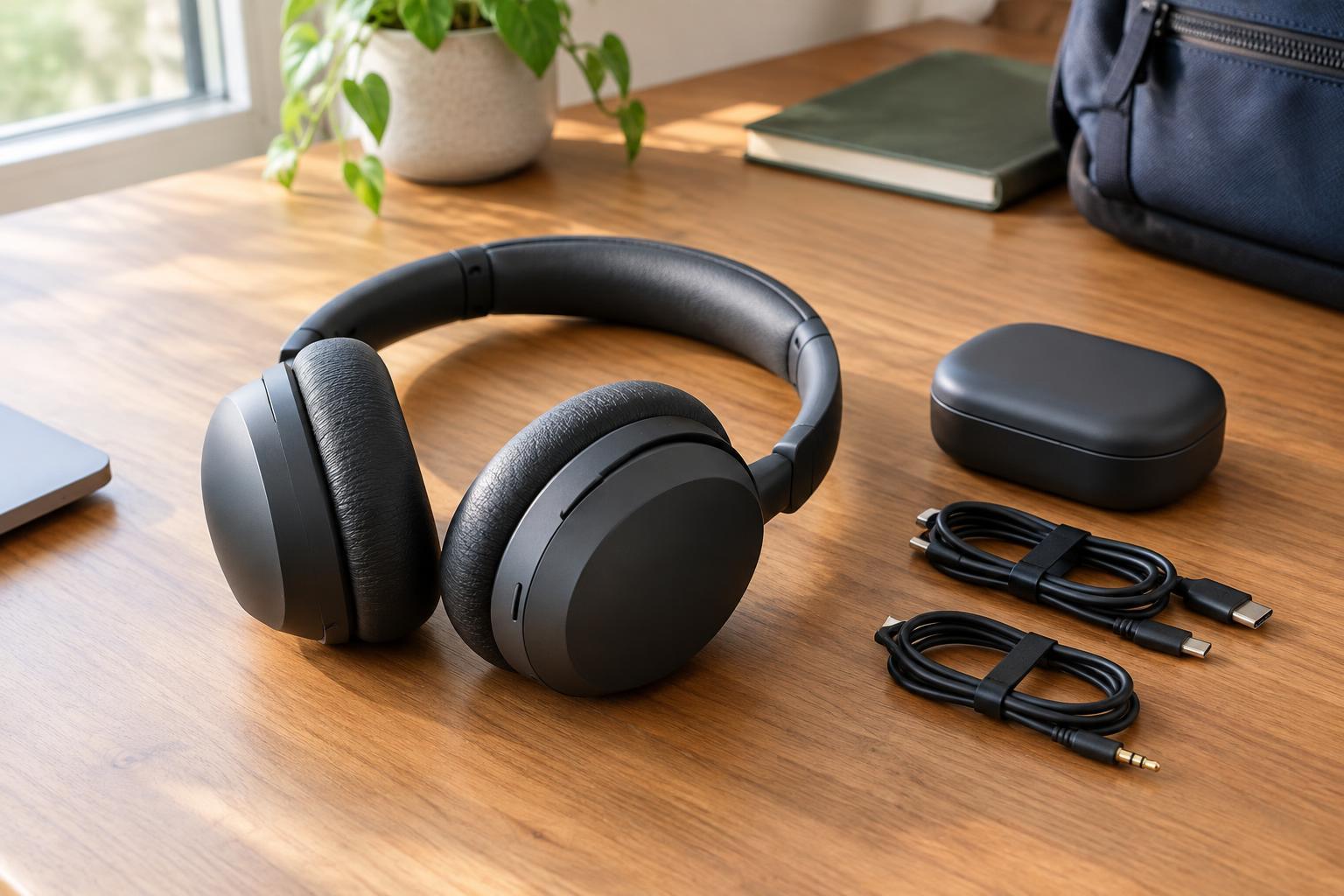
Over-ear headphones surround the ears and often offer room for larger controls and batteries. Their trade-offs can include bulk, warmth and pressure from the headband. Earbuds take up less space and may be easier to carry, but their noise isolation depends heavily on getting a secure seal. On-ear models sit against the ears rather than around them, which some people find less comfortable over long sessions. None of these designs is automatically the most comfortable.
If you can try a pair, wear it for more than a quick moment. Check whether glasses affect the earcup seal, whether the headband creates a pressure point and whether your ears touch the inside of the cups. With earbuds, try the included tip sizes and make sure they stay in place when you move your jaw or walk. A poor fit can undermine both comfort and noise cancellation, no matter how appealing the specifications look.
Also consider when you need to hear your surroundings. Many ANC models offer a transparency or ambient mode that lets outside sound in through their microphones. Compare how easily you can activate it, especially if you expect to use the headphones while commuting or sharing a workspace. These modes are useful, but they are not a substitute for paying attention to your surroundings.
Read battery claims in context
Battery-life figures are helpful for narrowing a shortlist, but check the conditions behind them. A quoted runtime may assume a particular volume, connection type or ANC setting. If you intend to leave noise cancellation on, look for a battery claim that specifically includes it. For earbuds, distinguish listening time from the earbuds themselves from the larger total that includes recharges in the case.
Think about your routine rather than chasing the highest number. A daily desk user may care more about whether the headphones can charge while in use. A traveler may value enough runtime for a long journey and a reliable way to check the remaining charge. Fast-charging claims can be convenient, but compare what they actually promise: charging time, resulting listening time and any required charger or cable.
Batteries gradually lose capacity with use, so charging convenience and product support deserve a place in the decision. Check whether replacement ear pads or ear tips are available, and whether the battery can be serviced if you hope to keep the headphones for years. Availability varies by model; do not assume that a premium price guarantees repairability.
Check every connection you need
For wireless listening, confirm that the headphones work with each phone, tablet or computer you use. Bluetooth multipoint can be useful if you regularly switch between two devices, but implementation varies: check how many devices can stay connected and how switching works. If you care about a particular Bluetooth audio codec, verify support on both the headphones and your playback device. A codec listed for only one side of the connection will not provide that pairing.
A cable can be a useful backup, but wired support is not always straightforward. Some headphones include an analog audio input, while others support audio through USB; some have no wired listening option at all. Check whether ANC works in wired mode and whether the headphones need battery power to play through a cable. If you plan to use a plane entertainment system, game controller or desktop computer, confirm the connector and any adapter you will need before buying.
Calls deserve a separate check from music playback. Built-in microphones, sidetone and mute controls may matter more for meetings than a long list of playback features. Product specifications can tell you which features exist, but they cannot fully establish comfort, call clarity or ANC performance in your environment. When possible, use a return window to try your shortlist with your own devices in the places you normally listen.
Make the final comparison simple
Put your top choices side by side and compare fit, battery life with ANC on, charging method, multipoint support and wired options. Mark any requirement you cannot confirm rather than assuming it is included. A comfortable pair that connects reliably to your everyday devices is usually a more useful purchase than one with an impressive feature list you rarely use.