Start with what you want to photograph
Before comparing camera specifications, name the situations in which you will actually use the camera. Travel and family photographs may call for a compact body and a versatile zoom. Wildlife often calls for a long lens and dependable autofocus. Portraits may benefit from a lens that gathers plenty of light and gives you control over background blur. Video adds questions about handling, audio connections and recording options. These priorities make it easier to judge a camera as part of a system rather than as an isolated purchase.
Decide, too, what your current equipment cannot do. If you mainly want better photographs in dim rooms, a new body paired with a slow lens may disappoint. If you want a camera you will carry every day, the size and weight of the lenses may matter more than a small difference between bodies. Treat advertised features as a shortlist, not proof of how a camera will feel in your hands.
Understand what sensor size changes
Common mirrorless sensor formats include full frame, APS-C and Micro Four Thirds. A larger sensor can offer advantages in low light and make a shallow depth of field easier to achieve with a suitable lens. It does not automatically make every photograph better. Lens quality, lighting, technique and the camera’s processing also affect the result. Smaller-sensor systems can be appealing when a compact kit and reach with telephoto lenses are priorities.
Sensor size also changes the view you get from a given focal length. A 35 mm lens, for example, frames a narrower scene on an APS-C camera than it does on a full-frame camera. When comparing sample kits, think in terms of the scenes each lens can fit into the frame, not just the number printed on its barrel. Compare the size of the complete body-and-lens combination as well: a small camera paired with the lenses you need may no longer be a small travel kit.
Choose a lens system, not just a camera body
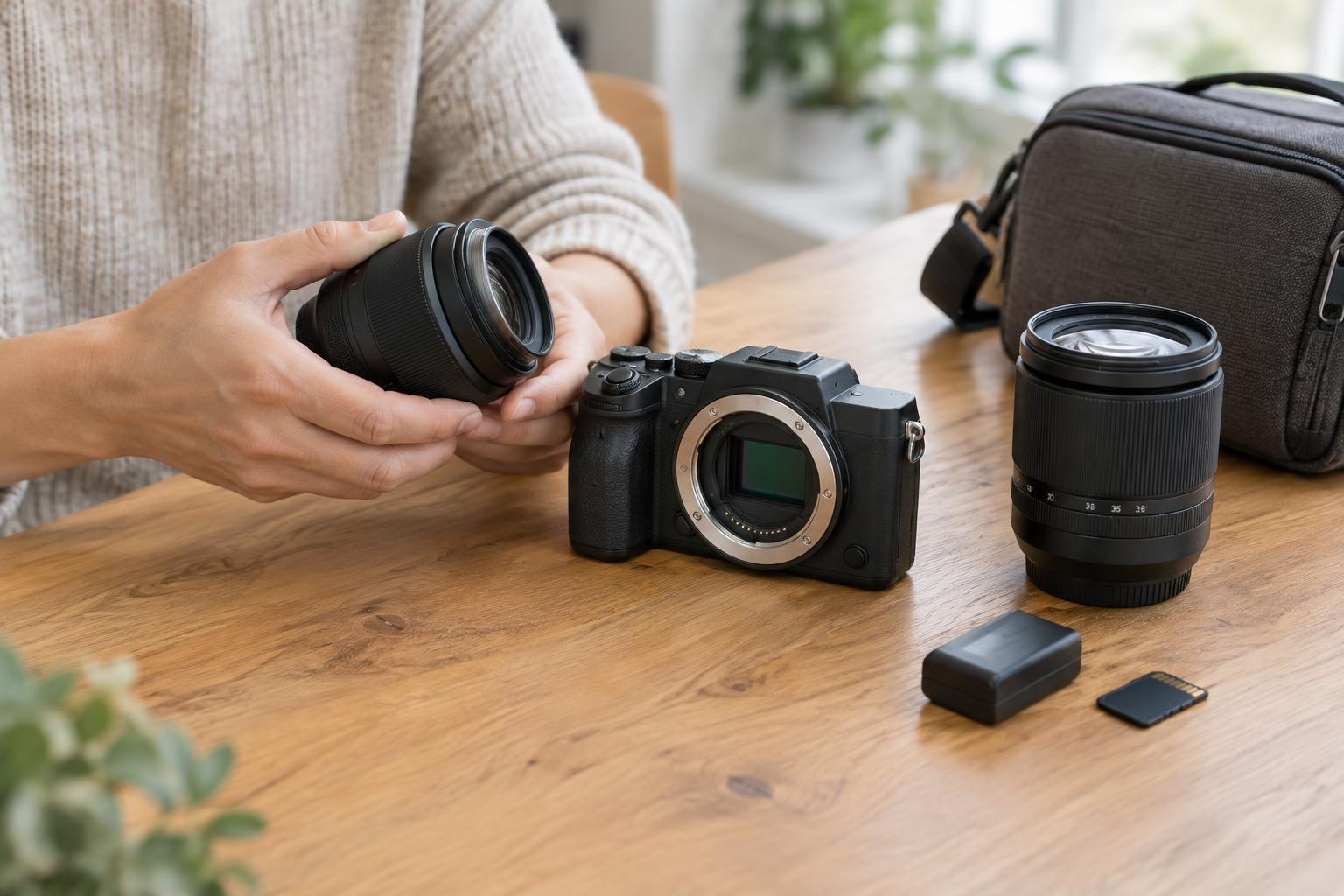
A mirrorless lens mount determines which lenses attach to a camera. Some systems offer several body and lens options; others may have a narrower selection in the focal lengths or price ranges you want. Make a short lens plan before picking a body: perhaps a general-purpose zoom now, followed by a small prime lens or a telephoto zoom later. Check whether those specific lenses exist for the mount and sensor format you are considering, and whether their size and price suit you.
Compatibility deserves a closer look than the words “fits this mount.” A lens may be designed for a smaller sensor and provide a reduced image area on a larger-sensor body. Adapted lenses can also vary in autofocus and other electronic functions. If you expect to use stabilization, weather protection or video autofocus, verify how the particular body and lens work together. This is a feature-based checklist, not a substitute for trying the equipment yourself.
Budget for the kit you will actually carry
The body price is a poor estimate of total system cost. Add the first lens, an extra battery if you need one, suitable memory cards, a comfortable way to carry the camera and any essential video or lighting accessories. Then price the lens you are most likely to want next. A lower-cost body can become the more expensive choice if the lenses that meet your needs cost substantially more, while an expensive body may leave too little room in the budget for a useful lens.
Consider ongoing costs and practical limits as well. Larger files may require more storage and backup space. A heavy telephoto lens may call for a sturdier bag or support. Used equipment can stretch a budget, but check its condition, compatibility and return terms before relying on it. Set a maximum for the complete first-year kit, including only accessories you have a clear reason to use. You can leave room for a later purchase once your shooting habits are clearer.
Make the final comparison in your hands
Narrow your options to two or three body-and-lens combinations that meet your needs and budget. Compare their viewfinders, controls, menus, grip and weight with the lens attached. Check whether you can change settings you use often without fighting the controls. If you cannot handle a camera before buying, review its dimensions and return policy carefully; body-only product images reveal little about the size of a working kit.
Keep your decision notes simple: what each kit lets you photograph now, which lens you might add next, and the total cost of that plan. Specifications can tell you whether a feature is present, but they cannot guarantee that a camera will be comfortable or enjoyable for you. The strongest choice is usually the system whose lenses fit your subjects, whose controls you can live with and whose cost leaves room to use it.