Start with the job each window needs to do
Before comparing motors or apps, decide what you want each shade to accomplish. A bedroom may need strong light blocking, while a living room may need glare reduction without making the space dark. A street-facing window may call for privacy at predictable times. Write down the goal for each window rather than assuming one shade style will suit the whole home.
Think about how often you currently adjust the shade. Automation may be especially useful for a tall window that is awkward to reach or for several shades you usually move together. On a window you rarely touch, a conventional shade might be simpler. If you are replacing existing coverings, note what you like about their fabric, appearance and light control; a connected model should still work well as a window covering.
Measure for the shade, not just the glass
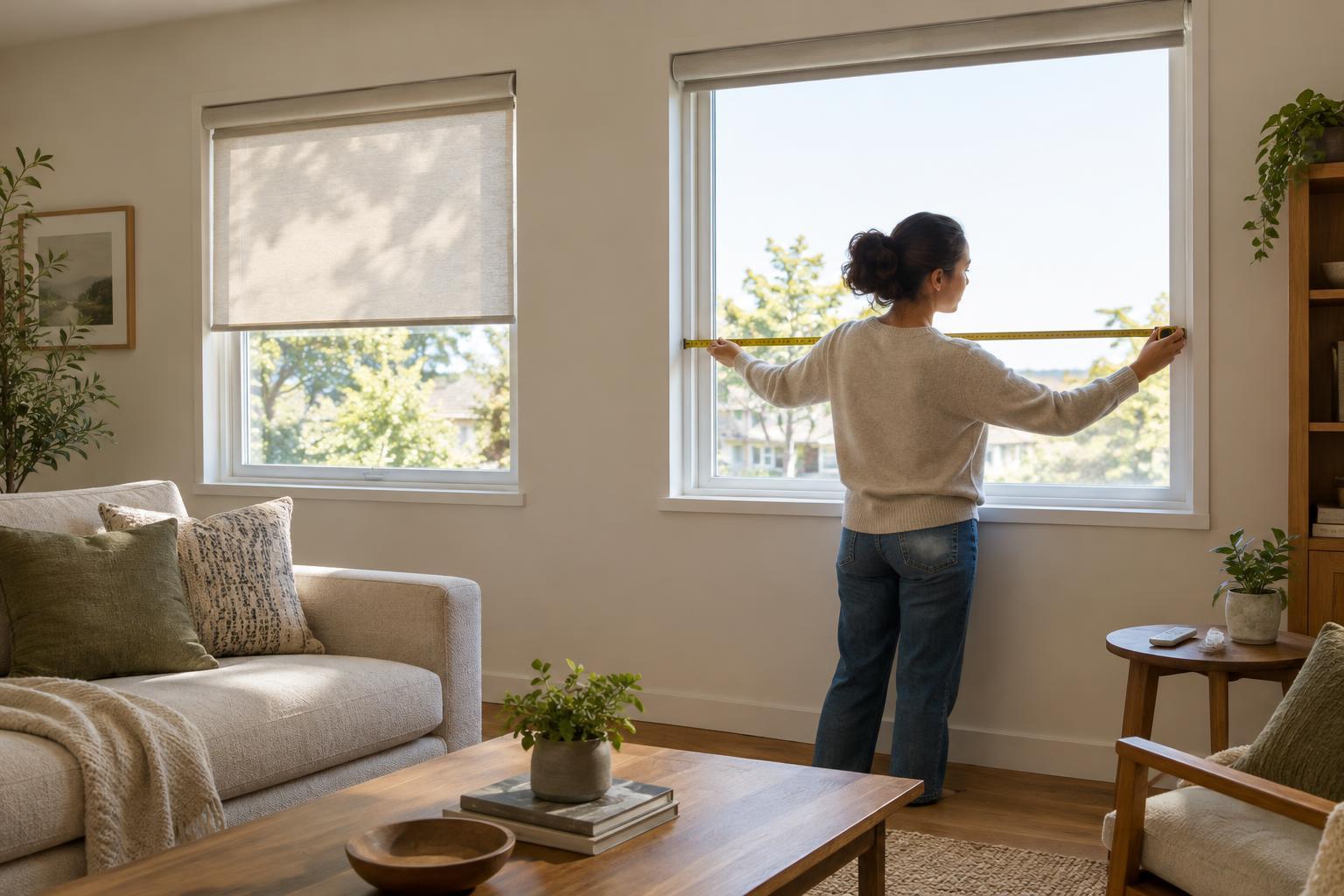
Check whether you want an inside mount, which sits within the window opening, or an outside mount, which covers an area around it. An inside mount depends on the available depth and a reasonably clear opening. An outside mount may provide more flexibility, but you need room above and beside the window for the shade and its hardware. Follow the measuring instructions for the specific product you are considering, since allowances and required clearances can differ.
Look for handles, window cranks, trim and nearby furniture that could obstruct the shade as it moves. If you plan to install several shades side by side, consider how gaps between them will affect light and privacy. Record measurements for every window separately, even when the windows appear identical. Check the return and alteration terms before ordering a custom size, because a measurement mistake may be difficult to correct.
Choose a power option you can live with
Battery-powered shades can avoid electrical work, but they still need a practical way to recharge or replace the batteries. Consider whether you can reach the shade without moving furniture and whether removing a battery pack will be convenient. If a product offers a solar charging accessory, check where it must sit and whether that position suits your window; do not assume it will eliminate charging in every room.
Wired power can reduce battery maintenance, but cable routing and outlet placement become part of the installation plan. For a new purchase, check exactly what is included: some systems may require a separate power supply, bridge, remote or wall control. Also consider motor noise. A shade that moves at a scheduled time near a bed or desk should be quiet enough for that room. Product descriptions can help narrow your choices, but they are not a substitute for checking the specifications of the model and size you intend to order.
Plan controls for everyone who uses the room
App control is useful, but it should not be the only way to operate a shade if other household members need access. Check whether the product supports a physical remote, wall control or manual operation, and learn what happens when the internet is unavailable. Some controls may work locally while others depend on an account, hub or cloud service. Confirm those requirements before you build a setup around a particular voice assistant or smart home platform.
Keep routines simple at first. A morning opening time and an evening privacy setting may be more useful than a long list of rules that conflict with one another. If a shade responds to sunlight, temperature or occupancy, check which sensor supplies that information and where it will be placed. Leave an easy way to override a schedule when someone is sleeping, watching a screen or working beside the window.
Check the everyday details before committing
Fabric, color and opacity affect the result as much as the connected features do. If possible, examine a sample in the room at different times of day. A fabric described as light-filtering may soften daylight while still allowing silhouettes to show after dark; blackout material may block more light through the fabric, but gaps around the edges can remain. Choose based on the privacy and light control you actually need.
Finally, review installation instructions, cleaning guidance and the manufacturer’s recommendations for any cords or accessible components, especially in rooms used by children. If you are outfitting multiple rooms, consider starting with one window. Living with that shade for a while can reveal whether its controls, charging routine and appearance fit your household before you repeat the setup throughout the home.